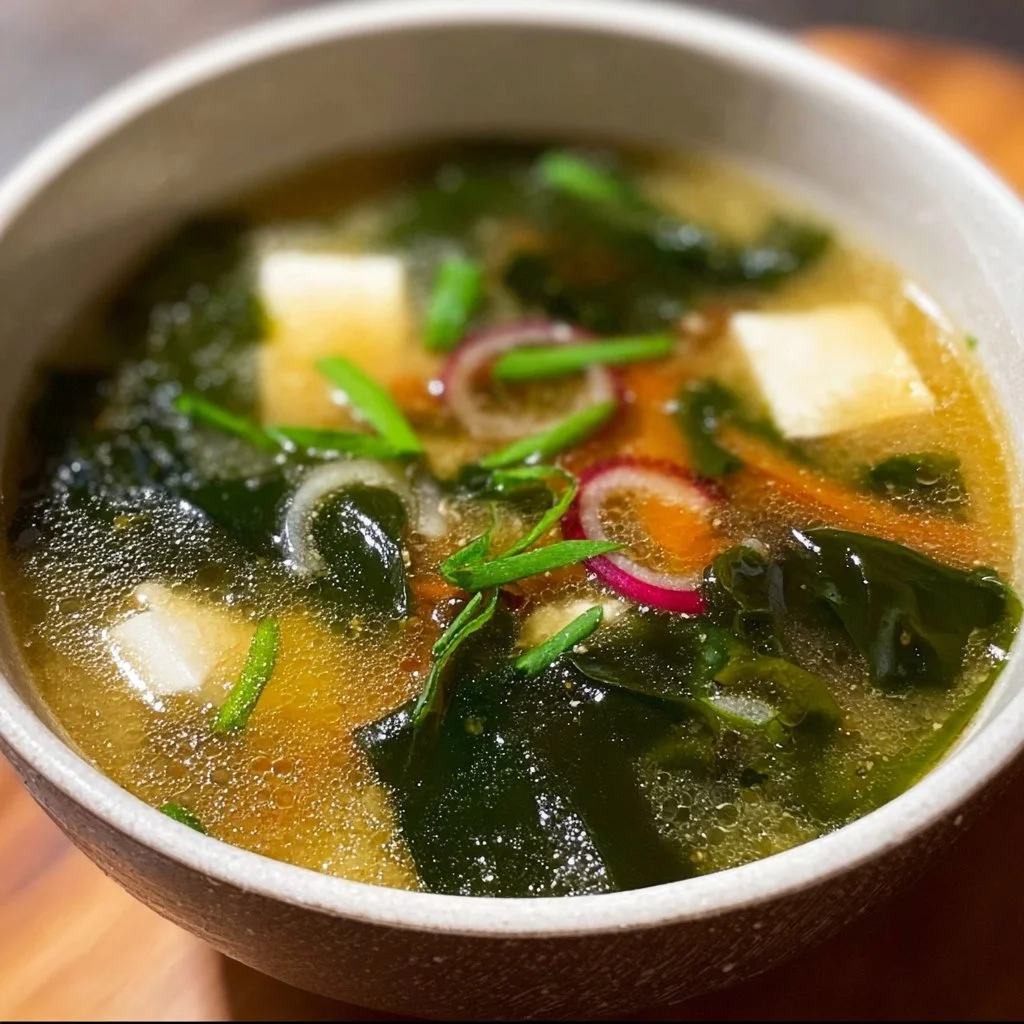
Miso soup is a traditional Japanese dish that has won the hearts of many around the globe for its simplicity and rich umami flavor. Its base, dashi, created with kombu and bonito flakes, serves as a flavorful foundation, while the addition of miso paste provides a comforting depth. It’s a heartwarming bowl that not only nourishes the body but also warms the soul, making it a staple in Japanese households and a favorite worldwide.
Why We Love This Miso Soup Recipe
This miso soup recipe stands out for its balance of flavors and textures. The subtle oceanic notes from the kombu and bonito, combined with the creamy silken tofu and the fresh crunch of scallions, create a delightful culinary experience. Miso soup is incredibly versatile, offering a nourishing meal that can be enjoyed any time of the day. Plus, making it at home allows you to customize the ingredients according to your taste preferences or dietary needs. Whether you’re looking for a warm starter, a satisfying meal, or a healthy snack, this miso soup has it all!
Ingredients about Miso Soup
To make this delightful miso soup, you’ll need the following ingredients that come together to create a flavorful dish:
- 4 cups water
- 6 inches Japanese kombu (or dried kelp, rinsed)
- 1 ounce dried bonito flakes
- 1 ounce dried seaweed (soaked in warm water and drained)
- 4 ounces silken tofu (cut into small pieces)
- 2 1/2 – 3 tablespoons white miso paste
- 1 tablespoon scallion (chopped)
Gathering these fresh ingredients will ensure a tasty and authentic miso soup, perfect for anyone eager to enjoy a comforting bowl.
How to Make Miso Soup Directions
Creating your own miso soup is both easy and rewarding. Begin by preparing the dashi, which serves as the base for your soup. Start by bringing 4 cups of water to a gentle boil in a stock pot over medium heat. Once the water is boiling, carefully introduce the kombu to the pot. Allow it to simmer for about 5 minutes, and then remove the kombu, setting it aside for future use or discard.
Next, add the bonito flakes to the boiling water. Let the mixture simmer for another five minutes. During this time, keep an eye on the surface of the soup; you may notice some foam or impurities rising. Use a ladle to skim this off, ensuring a clear and beautiful dashi.


After the dashi has simmered, it’s time to strain it. Use a fine sieve to filter out the bonito flakes. What you have left is a clear, flavorful dashi that’s the perfect base for your miso soup. Return the strained dashi to the stove and bring it back to a gentle boil.
Once boiling, add the soaked seaweed and the silken tofu pieces. Allow them to cook together for about three minutes. The tofu should warm through, and the seaweed will soften, contributing its unique texture to the soup.
After these ingredients have cooked together, remove the pot from the heat. Now comes the star of the show—add 2 1/2 to 3 tablespoons of white miso paste. Stir it gently to dissolve the miso completely into the soup, creating a silky, smooth texture.
At this stage, you can taste the soup and adjust the miso level according to your preference. Some like it more robust, while others prefer a subtler flavor. Finish by sprinkling chopped scallions on top for a burst of color and fresh flavor. Enjoy your steaming bowl of homemade miso soup immediately for the best experience!
How to Serve Miso Soup
When it comes to serving miso soup, presentation and temperature play a vital role. Begin by ladling the soup into your favorite bowls. Use shallow, wide bowls to make it easy for your guests to enjoy the delicious broth and tender ingredients.
For a traditional touch, consider serving the soup with a garnish of additional scallions or even a sprinkle of sesame seeds. This not only enhances the visual appeal but adds a nuanced layer of flavor.
Miso soup is often enjoyed alongside a variety of dishes, such as sushi, rice bowls, or steamed vegetables, making it a fabulous companion to a full Japanese meal. However, it can also stand alone as a starter or light meal.
When serving, remind your guests to enjoy the soup while it’s hot. The warmth enhances the flavors and makes for a comforting experience. Pair with chopsticks for the tofu and a spoon for the broth to make the experience both enjoyable and authentic.
Expert Tips: Miso Soup
To ensure your miso soup turns out perfectly every time, consider these expert tips. First, always use high-quality ingredients. Opt for fresh kombu and bonito flakes to ensure the best dashi flavor. If you’re using miso paste, look for unpasteurized varieties, as they tend to have more depth and nutrients.
Be careful not to boil your miso once it’s added to the soup. High heat can destroy the beneficial probiotics found in the miso, negating some health benefits. Instead, let it dissolve off the heat.
Another great tip is to experiment with additional ingredients. Feel free to incorporate more vegetables like mushrooms, carrots, or spinach. You can also use various types of seaweed to mix up the texture and flavor.
Lastly, adjust the saltiness of the soup according to your personal preference. Miso can vary in salt content, so start with a smaller amount and taste as you go.
How to Store Miso Soup
If you find yourself with leftover miso soup, there are ways to store it properly. To keep the soup fresh, allow it to cool completely at room temperature. Once cool, pour it into an airtight container for maximum preservation.
In the refrigerator, the soup will remain good for about three days. However, keep in mind that the tofu may become a bit firmer over time, and the overall texture might change.
Miso soup is not recommended for freezing, as the tofu could alter in texture when thawed. When you are ready to enjoy stored soup, reheat it gently on the stove and avoid boiling to preserve the miso’s flavors and health benefits.
Variation of Miso Soup
One of the best features of miso soup is its versatility. You can easily tweak the ingredients to cater to your taste or available produce. If you’re looking to add more flavor, try incorporating a dash of soy sauce or a splash of mirin for a touch of sweetness.
For a heartier soup, consider adding noodles—udon or soba work wonderfully. Just cook them separately according to package instructions and add them before serving is ideal.
Another fantastic variation is incorporating seasonal vegetables. In the spring, add fresh peas and asparagus; in the fall, go for pumpkin or butternut squash.
For those looking for protein, you can add cooked shrimp or scallops as a luxurious touch. You can also incorporate other proteins like eggs, either poached or beaten, for additional richness.
Don’t hesitate to get creative and make this soup your own!
FAQ
What is miso soup, and what are its main ingredients?
Miso soup is a traditional Japanese soup that primarily consists of dashi, a stock made from kombu (dried seaweed) and bonito flakes, along with miso paste. It often includes tofu and seaweed as well.
Can I make miso soup vegan?
Yes, you can easily make miso soup vegan by omitting bonito flakes and using a vegetable-based dashi. Use kombu and various mushrooms to create a rich, umami flavor without animal products.
How healthy is miso soup?
Miso soup is quite nutritious. It contains beneficial probiotics from miso, which can promote gut health. Additionally, it provides protein from tofu and minerals from seaweed.
How can I adjust the flavor of my miso soup?
You can adjust the flavor of your miso soup by varying the amount of miso paste you add. Tasting and adjusting while cooking is the best way to achieve your desired flavor profile. Adding soy sauce or other umami-rich ingredients can also enhance the taste.
Can I add other ingredients to my miso soup?
Absolutely! Miso soup is highly customizable. You can add a variety of vegetables, noodles, or proteins according to your preferences. Experiment and find the combination that satisfies your palate!

Miso Soup
Ingredients
Dashi Base
- 4 cups water Use good quality water for best flavor.
- 6 inches Japanese kombu Also known as dried kelp, rinsed.
- 1 ounce dried bonito flakes
Soup Ingredients
- 1 ounce dried seaweed Soaked in warm water and drained.
- 4 ounces silken tofu Cut into small pieces.
- 2.5 tablespoons white miso paste Adjust between 2.5 to 3 tablespoons to taste.
- 1 tablespoon scallion Chopped, for garnish.
Instructions
Prepare the Dashi
- Bring 4 cups of water to a gentle boil in a stock pot over medium heat.
- Introduce the kombu to the pot and let it simmer for 5 minutes. Remove and discard or save for future use.
- Add the bonito flakes to the boiling water and simmer for another 5 minutes. Skim any foam or impurities off the surface.
- Strain the dashi using a fine sieve to filter out the bonito flakes.
Cooking the Soup
- Return the strained dashi to the stove and bring it back to a gentle boil.
- Add the soaked seaweed and silken tofu pieces and cook for about 3 minutes until they are warm and soft.
- Remove the pot from heat and stir in the white miso paste until it’s completely dissolved.
- Taste and adjust the miso level if needed. Garnish with chopped scallions before serving.
Send me this recipe!
Just enter your email below and get it sent straight to your inbox!